Text Wybe van de Kuinder translation Cindy Hock Illustration Hans van der Spek
VOTING!!! 18 March 2026 Municipal Elections
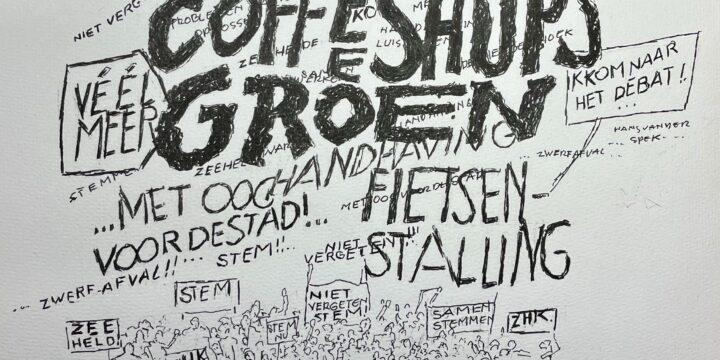
It seems a long way off, but it will not be long now. On 18 March, we can vote again. You may wonder how important your individual vote really is. But do not underestimate your vote. “Many small ones make one big one” is an old Dutch saying. Make no mistake. This is about you. You are the one who helps make it all work. The municipality works for you. You, resident of The Hague, the voter, ensure through your voting behaviour that the projects devised by politicians from various parties are being implemented.
In some countries, like the United States, there are only two parties, but here there are many parties running in the elections, and they all have their own ideas about how The Hague should move forward in the next four years. That does not make it any easier. You see the same thing in national elections. After the results are in, the parties will have to work together. So when you vote, also consider the parties that could and, more importantly, would be willing to work with the party of your choice.
We asked the political parties to describe in no more than 200 words what they consider important for the Zeeheldenkwartier and the rest of the city. These summaries can be found in the election section in the middle pages of this newspaper. If you want more information, you can consult the full programmes and plans of the parties for the municipality of The Hague on the internet. What do they consider important when it comes to themes like public space, greening, parking, public transport, housing, education, culture, and so on? Be aware that if you vote for a party that gives cars priority, for example, this will be at the expense of green spaces and safety. We have limited space in The Hague, and that space simply needs to be divided.
Well ahead of the elections, on Wednesday evening 18 February at 7.30 PM, the residents’ organisation is organising a political debate at De Heldenhoek, Elandstraat 88. Our moderator, former board member Ludo Geukers, will ask the incumbent and future council members tough questions, such as: “What did you promise four years ago, and what has been achieved?”, “What are your plans for this district in the next four years?”, “Who do you want to work with and what are your priorities?”.
After the break, the audience will have the opportunity to ask questions to the representatives of the political parties. If your pressing question has not yet been addressed in the preceding discussion, you will have the chance to ask it. Refreshments will be served, and many local residents will be in attendance. This is an excellent opportunity to meet local residents as well as political leaders and to learn about the issues affecting our community.
Compulsory voting, or rather compulsory attendance, was abolished in the Netherlands in 1970. So you are not obliged to vote. If you do not believe in democracy, then that is the end of it, but if you do not want your vote to disappear into the largest party, you will still have to go to the polling station to invalidate your vote. Voting, and even not voting, is hard work and requires a lot of thought. After this newspaper has been published, you still have some time. If you do not feel like it on that day, remember that you are making a choice for the city council for the next four years. And as an added bonus, my aunt Sophia has been happily married for thirty years to the man she met at the polling station thirty-two years ago! She voted for the left, he voted for the VVD, and as it happens, she is the boss at home. But she would have been even if she had voted for the right and he for the left.
Together with other voters, you elect a council for the next four years. So, to some extent, you have control over the fate of the district where you live.